
Pitching Your Client
It’s Not The What, But The Why
Executive candidates don’t care about job descriptions. They care about the Why. This article breaks down how to reframe a pitch into a narrative around industry drivers, company momentum, product fit, leadership, and impact – the essentials of executive search.
If your pitch to an executive candidate sounds like a job description, you’ve already lost them. Because you’re stuck on the What, not the Why.
What This Means
A younger recruiter asked me recently: what do you mean by the Why vs the What?
Here’s how I frame it:
The What is the JD. Company, product, people, facts.
“Salesforce is the leader in cloud CRM, changing the game from installed software to cloud-based access. They do ~$38B in revenue and are hiring an XYZ to do ABC.”
True, but surface-level.
The Why reframes those same facts into a narrative. And that’s what senior candidates expect.
Back in my first sales training, I was taught: start with the big end of the wedge, then work to the pointy end. A VMware Japan sales director hammered the same point home years later – the Why wins.
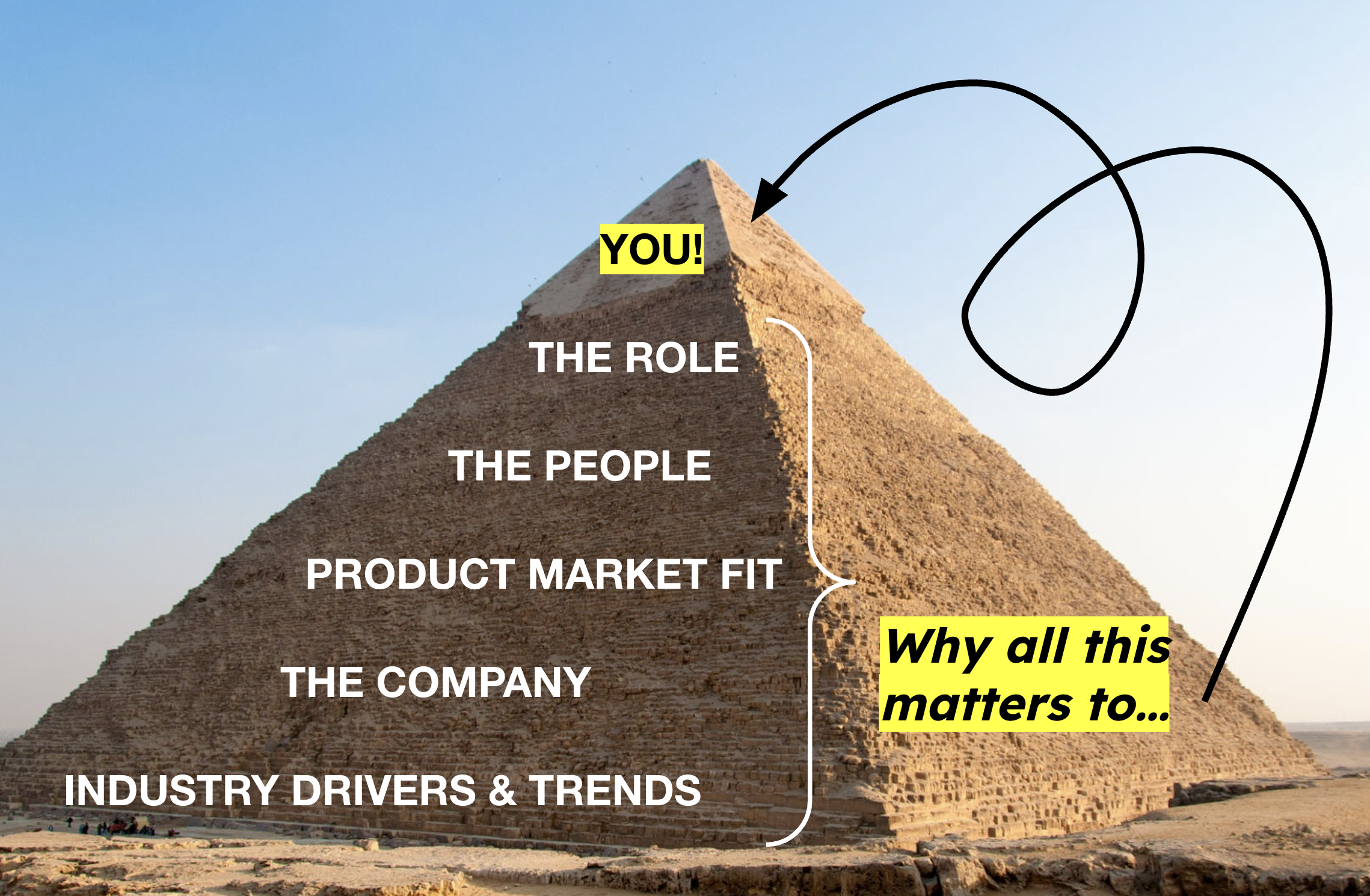
The Iceberg, or Pyramid
Think of it like an iceberg (or a pyramid if you prefer): the JD is the tip above water. Everything that matters sits below.
Here’s what that looks like in practice:
Industry Drivers & Trends – What’s happening at a macro level?
Company Momentum – How is this company riding those drivers? Why are they different?
Product Market Fit – What’s their edge and roadmap? Will it hold 3–5 years out?
People – Who inspires? Who will you work with? Why join them?
Role – What needs doing? What challenges must be solved? Why is it critical?
Candidate – Why you? How does this tie back to your career and life goals?
At the executive level, decisions literally set the trajectory of a business. Leaders win partnerships, secure reference clients, and define strategy. The stakes are high, the margin for error slim.
By contrast, mid-career ICs – who are no less valuable – influence outcomes through execution. They move the dial. Executives decide which dial to turn, and by how much.
Both matter. But in executive search, the Why matters most: the sphere of influence is broader, the consequences greater, and the story more important.
It’s About Matching Vision To Candidate Goals
In tech recruitment especially, candidates want to know:
What are the industry drivers behind the company? Does it have a future?
What’s the momentum? Is their vision of the future being accepted?
How well do the products actually solve the market problem? What are they doing better than their competitors?
Who are the people they’ll respect and learn from? Can I be inspired by the people I will work with/for?
Is the role just for today, or does it carry them into the future?
It has to make sense. It has to tie back to what they told you they’re looking for in career and life.
Get that right and everyone wins. Winner winner, chicken dinner.
